Apartment Buildings in Kenya Need Individual Water and Electricity Metering
Managing water and electricity across multiple apartments can become complicated when consumption, billing and payments are difficult to track individually. Learn how individual utility metering can help Kenyan property managers improve billing transparency, monitor usage and make better-informed decisions.
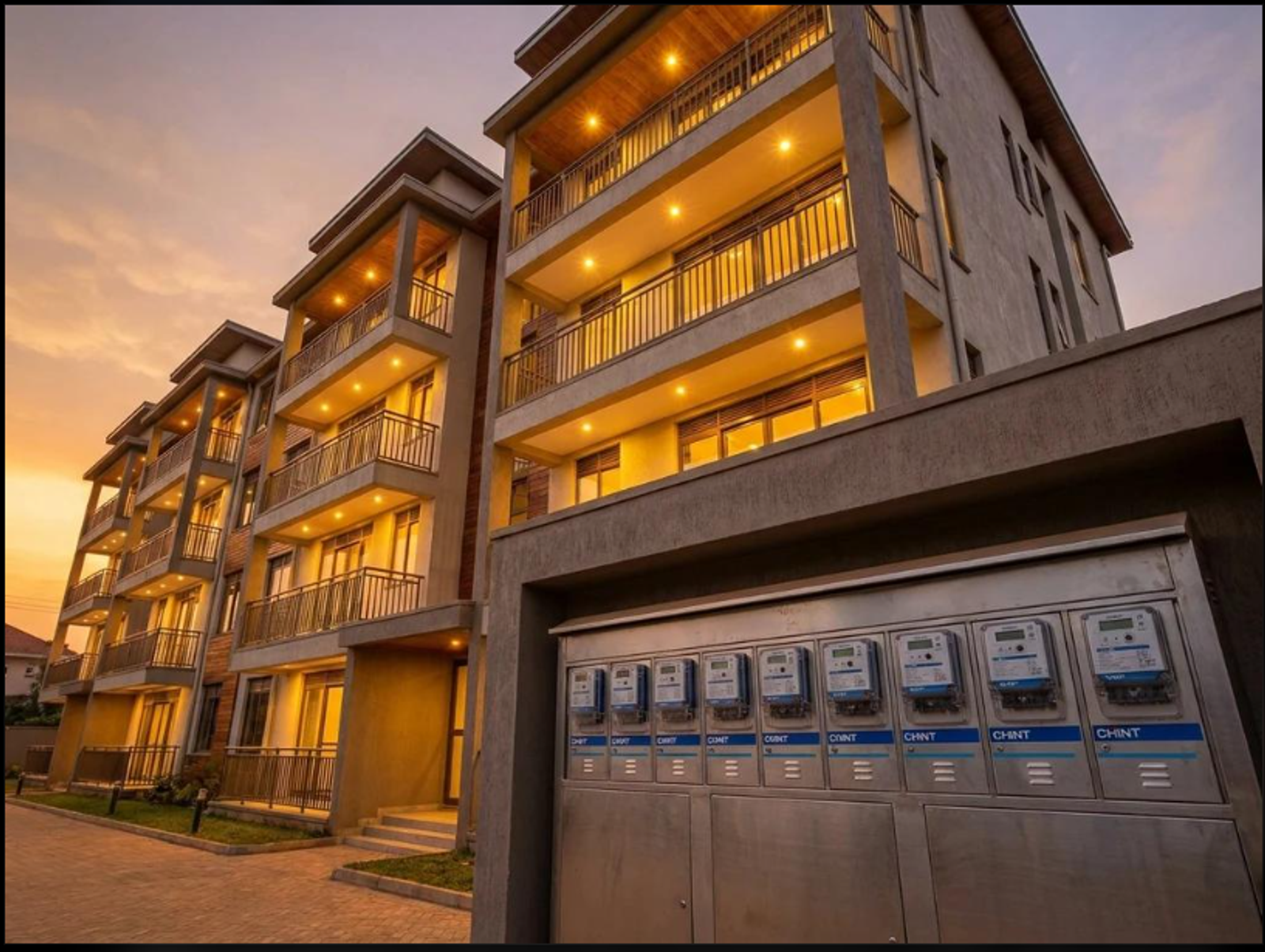
Why Apartment Buildings in Kenya Need Individual Water and Electricity Metering
As apartment developments continue to shape Kenya's urban housing market, managing water and electricity across multiple households has become an important consideration for property developers, landlords and property managers.
A building may have dozens or even hundreds of occupants, each with different consumption habits. Yet the way utilities are measured, allocated and billed can have a direct impact on residents' experience and the workload of the team managing the property.
When utility consumption is not clearly attributable to individual units, answering a simple question — who used how much? — can become difficult.
Individual utility metering offers a practical way to improve visibility into consumption. When combined with appropriate billing procedures and reliable records, it can help property managers make utility charges more transparent and manage their buildings with better information.
The challenge of managing utilities in multi-unit buildings
Consider an apartment block where several households share a bulk water connection or a common electricity supply arrangement.
The property manager must determine how to allocate the overall utility cost among the occupants. Depending on the building's setup, this might involve manual meter readings, agreed allocation formulas, spreadsheets or fixed charges.
These arrangements are not automatically wrong. However, when individual consumption cannot be measured reliably, residents may find it difficult to understand how their charges were calculated.
For property managers, the challenges can include:
- Billing disputes: Residents may question charges when the calculation cannot be clearly explained.
- Manual administration: Collecting readings, calculating charges and preparing statements can take considerable staff time.
- Limited consumption visibility: Managers may struggle to identify which units have unusually high usage.
- Difficult reconciliation: Comparing the total utility bill with amounts allocated or collected from occupants can require additional investigation.
- Limited historical records: Without consistent readings, it can be difficult to compare consumption across billing periods.
The extent of these problems depends on the building's design, metering arrangements and management practices. Individual metering is one approach to addressing them.
What is individual utility metering?
Individual utility metering involves measuring the consumption attributable to a particular apartment, tenant, unit or designated area rather than relying exclusively on a single measurement for the entire property.
For water, this can involve installing suitable submeters on the supply lines serving individual apartments. For electricity, it can involve appropriately designed meters that measure consumption for individual units.
The precise arrangement depends on the building's incoming supply, distribution infrastructure, electrical design and applicable technical requirements.
It is also important to distinguish between a meter and a smart meter.
A conventional meter records consumption and may require someone to read it physically. A smart meter or connected metering system may support electronic data collection, remote readings or additional monitoring functions, depending on the equipment and system configuration.
Smart metering does not automatically mean that every reading is transmitted in real time. Communication capabilities, network coverage, device compatibility and software integration all matter.
Why individual metering matters for apartment owners and managers
1. More transparent utility billing
When a unit has a suitable individual meter, its recorded consumption can provide a clearer basis for calculating its usage-related charge.
For example, suppose two apartments occupy the same building. One household uses 8 cubic metres of water during a billing period, while the other uses 14 cubic metres.
If the units have correctly installed and functioning meters, the manager can use those readings to calculate the respective consumption charges under the applicable billing arrangement.
This is more informative than assuming that both apartments used the same amount.
The final bill may still include applicable fixed charges, common-area consumption, taxes or other authorised components. Individual readings do not remove the need for a clear billing policy.
2. Better accountability for consumption
When consumption can be associated with individual units, residents and property managers have more useful information for understanding usage.
A household that notices an increase in its water consumption can investigate possible explanations, such as a leaking toilet, a faulty tap, changes in occupancy or increased water use.
Similarly, electricity consumption records may help residents understand how their usage changes over time.
Meter readings alone do not identify the cause of increased consumption. They provide evidence that can guide further investigation.
3. Easier identification of unusual usage
Suppose an apartment's water consumption rises significantly compared with its previous billing periods.
With consistent meter readings, the property manager can flag the change for investigation. Possible causes include a leak, a change in occupancy, a faulty meter or a genuine increase in consumption.
A connected monitoring system may make it easier to review readings and, where supported, identify unusual patterns without relying entirely on manual checks.
The value lies in identifying a potential issue earlier and investigating it with better information — not in assuming that every increase indicates a leak.
4. Improved utility cost reconciliation
Property managers often need to compare the utility supplier's bill with consumption recorded across the building.
Where individual submeters are used, the total of those readings can be compared with the bulk meter reading for the same period.
For water, a difference may reflect common-area use, leaks within the property's distribution system, differences in reading dates, meter accuracy or other factors.
For electricity, reconciliation must account for the actual metering arrangement, common services and electrical distribution design.
These comparisons can help managers identify discrepancies that deserve attention. They should not assume that every difference represents theft, wastage or a billing error.
5. More organised property management
A well-designed utility management process can bring readings, billing periods, tenant records and payment information into a more consistent workflow.
Instead of searching through separate notebooks, spreadsheets and payment records, a property manager may be able to review the information associated with a unit in one place, depending on the software in use.
For buildings with frequent tenant changes, reliable records are particularly useful for documenting opening and closing readings and determining the relevant consumption period.
What Kenya's water-sector data tells us
The importance of metering and billing information is also reflected in Kenya's wider water sector.
In its IMPACT 17: A Performance Report of Kenya's Water Services Sector — 2023/24, the Water Services Regulatory Board (WASREB) discusses smart metering, enhanced billing systems and the role of accurate consumption records in water-service management.
The report describes how water service providers use billing systems to bill customers based on recorded consumption. It also discusses manual meter reading and automated meter-reading technologies, as well as the growing use of digital tools for billing and customer service.
WASREB's IMPACT 18 report, covering the 2024/25 financial year, provides a more recent assessment of the sector, including metering, billing efficiency and non-revenue water.
These reports concern the regulated water-services sector as a whole. Their findings should not be interpreted as measurements of billing disputes or metering adoption in Kenyan apartment buildings specifically.
Nevertheless, they illustrate an important operational principle: reliable measurements and useful billing information are essential components of effective utility management.
Sources:
- WASREB — IMPACT Reports
- WASREB — IMPACT 17: Water Services Sector Performance Report 2023/24 (PDF)
- WASREB — IMPACT 18: Water Services Sector Performance Report 2024/25
Is individual metering enough?
Individual metering can improve consumption visibility, but installing meters alone does not solve every utility management challenge.
The outcome depends on several practical considerations.
Meter suitability and installation: Equipment must be appropriate for the application and installed correctly. Meter accuracy, maintenance and accessibility also matter.
Reliable readings: Readings should be collected consistently, with clear billing periods and procedures for handling missing or questionable data.
Common-area consumption: Shared facilities, security lighting, lifts, pumps, landscaping and other services may require separate measurement or a clearly documented allocation method.
Billing rules: Residents should understand how consumption charges are calculated, how shared costs are handled and how they can query a bill.
System integration: If the property uses digital billing, the metering equipment and software must be compatible with the required data collection and billing workflow.
Communication and connectivity: Remote monitoring depends on the capabilities of the chosen equipment and the availability of a suitable communication method.
Cost and long-term maintenance: Developers should evaluate installation costs, ongoing support, replacement requirements and the expected operational benefits before choosing a system.
For electricity in particular, metering and billing arrangements should be designed in accordance with applicable electrical safety requirements, supply arrangements and regulatory obligations. Property owners should confirm the appropriate arrangement with qualified professionals and relevant authorities before implementation.
What should property developers consider before installing individual meters?
For a new apartment development, utility metering is best considered during the planning and building-services design stages rather than treated solely as an afterthought.
Developers and property managers can begin with these questions:
- Does each apartment need its own water meter, electricity meter or both?
- Where will the meters be installed, and can authorised personnel access them safely?
- Will readings be collected manually or electronically?
- How will common-area consumption be measured and allocated?
- How will readings be converted into tenant statements and utility charges?
- Can the chosen equipment integrate with the intended billing or property management software?
- What are the installation, maintenance, communication and replacement costs?
- What procedures will govern disputed readings, faulty meters and tenant changes?
For existing buildings, a preliminary assessment of the current plumbing, electrical distribution, metering points and billing practices can help establish whether individual metering is technically feasible and financially sensible.
There is no single arrangement that suits every property. A small apartment block and a large mixed-use development may have very different technical and operational requirements.
From individual meters to intelligent utility management
Once a property has reliable consumption data, the next question is how to use it effectively.
A connected utility management system can bring together relevant metering data, consumption records, billing workflows and reports. Depending on the equipment and software, this can reduce repetitive administrative work and make it easier to review utility information across multiple units.
For example, a property manager may want to review consumption by apartment, prepare billing statements for a particular period, check outstanding charges or investigate a discrepancy between the bulk reading and individual readings.
The usefulness of such a system depends on the quality of the underlying data, the accuracy of the billing rules and the functions actually supported by the implementation.
For property owners and developers, the objective should not simply be to install newer meters. It should be to establish a reliable process for measuring consumption, explaining charges and making informed decisions about the building's utilities.
Final thoughts
As Kenya's apartment and mixed-use property market develops, effective utility management deserves attention alongside other building operations.
Individual water and electricity metering can give property managers a clearer view of unit-level consumption, support more transparent billing and provide useful information for investigating unusual usage.
The greatest benefit comes when suitable meters are combined with clear billing policies, reliable records, appropriate maintenance and systems that make the data useful.
For developers planning a new building, or managers reviewing an existing property's utility arrangements, assessing the metering setup is a practical place to begin.
Planning a smarter approach to utility management?
Utilora Technologies works in intelligent utility management, bringing together metering, connectivity, billing and consumption insights. If you are evaluating utility management options for an apartment development or managed property, contact our team to discuss your requirements and the options appropriate for your building.