How Smart Metering Is Transforming Utility Management in Kenya
Discover how smart metering and digital utility management can improve consumption visibility, support billing workflows and help property managers make informed decisions in Kenya.
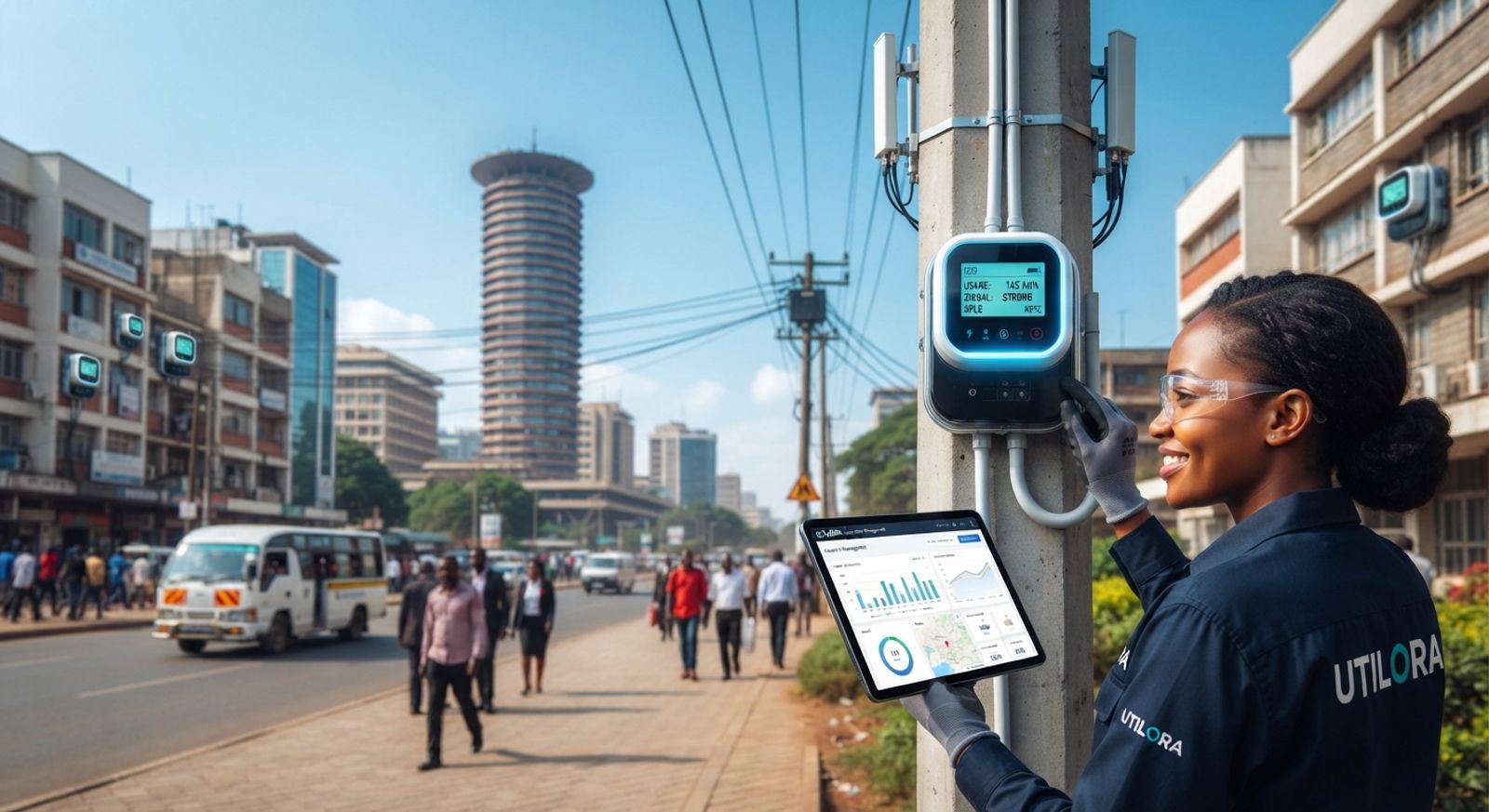
How Smart Metering Is Transforming Utility Management in Kenya
Electricity and water are essential to residential buildings, commercial properties, institutions and industrial facilities. Yet managing these utilities involves more than recording meter readings. Property managers and utility operators must also maintain reliable consumption records, prepare bills, monitor payments and investigate discrepancies.
Smart metering and digital utility management offer ways to improve these processes by connecting consumption data with the systems used to manage customers, accounts and billing.
For organisations in Kenya, the opportunity is not simply to replace a traditional meter with a digital device. It is to build a more connected process from measurement to management.
What Is Smart Metering?
Smart metering uses digital metering technology to measure and record the consumption of a utility such as electricity or water. Depending on the equipment and communication capabilities, readings may be retrieved locally, transmitted remotely or made available through a connected management platform.
Advanced systems can support more frequent readings and improved consumption visibility. However, features such as real-time monitoring, remote disconnection and automated alerts depend on the meter, communication network, integrations and system configuration.
The important distinction is between measuring consumption and using that information effectively. A meter generates data; a well-designed utility management process helps turn that data into actionable information.
Why Utility Management Matters in Kenya
Kenya's water and energy sectors are increasingly incorporating digital tools into service delivery and operational management.
The Water Services Regulatory Board (WASREB) assesses water service provider performance using indicators that include metering, non-revenue water and revenue collection efficiency. These indicators demonstrate why accurate consumption records and effective revenue processes matter to water service management.
In the electricity sector, Kenya Power has reported initiatives involving smart metering for selected customer categories, alongside technologies designed to improve meter-reading efficiency and billing accuracy. These initiatives illustrate how digital systems can support operational improvements. They do not mean that every customer or building currently uses advanced smart metering.
The broader opportunity extends to property managers, landlords, facilities teams and organisations responsible for allocating and recovering utility costs.
Traditional Meter Reading Versus Smart Metering
Traditional meter-reading processes can require staff to visit meters, record readings and transfer the information into billing systems. Manual entry, inaccessible meters, missed readings and delayed data transfer can introduce operational challenges.
A digital or smart metering workflow can reduce some of these limitations, depending on the equipment and implementation.
Traditional workflows may involve:
- Periodic physical meter readings.
- Manual recording or transfer of consumption data.
- Delays between consumption and billing.
- Separate records for meters, customers and payments.
- Additional investigation when readings appear inconsistent.
Connected workflows may support:
- Digital capture or remote retrieval of readings.
- More frequent access to consumption information.
- Centralised meter and account records.
- More consistent transfer of readings into billing processes.
- Reporting that helps staff identify unusual patterns for investigation.
These are potential capabilities, not automatic outcomes. Data quality, meter compatibility, network availability and the reliability of the billing process remain important.
Five Ways Smart Metering Can Improve Utility Management
1. Better Consumption Visibility
Access to reliable meter readings helps property managers and operators understand how much electricity or water is being consumed over a given period.
More frequent readings can help reveal changes that periodic manual readings may miss. This information can support investigations into unexpected consumption, although a change in readings alone does not establish the cause.
2. More Consistent Billing Workflows
Billing depends on accurate readings, correctly configured tariffs, appropriate billing periods and reliable account records.
Connecting meter data to a billing workflow can reduce repetitive data entry and help staff identify missing or inconsistent readings before preparing invoices.
Digitalisation cannot correct an incorrectly configured tariff or an inaccurate meter automatically. Those controls must remain part of the process.
3. Improved Payment Tracking
Consumption records and billing information are more useful when linked to payment records.
A connected utility management process can help organisations reconcile what was billed against what was received, identify outstanding balances and maintain clearer account histories. Mobile money integration may provide another part of this workflow where it is supported and properly configured.
4. More Informed Operational Decisions
Historical consumption records can help managers compare usage across properties, units or billing periods.
When combined with reliable account and meter information, these records can support budgeting, investigation and resource planning. Advanced analytics may reveal patterns, but their usefulness depends on the quality and completeness of the underlying data.
5. More Accountable Utility Management
Clear meter records, billing histories and payment information can make it easier to explain how charges were calculated and investigate disputes.
Transparent processes are particularly valuable in properties where multiple tenants or occupants share responsibility for utility costs.
Smart Metering for Apartments and Commercial Buildings
Multi-tenant properties have additional requirements because a single building may contain numerous units, tenants, meters and billing accounts.
A property manager may need to identify which meter serves each unit, maintain occupancy records, calculate charges according to the applicable arrangement and track payments.
A suitable system should help keep these records connected while preserving clear access controls and audit trails.
Before adopting smart metering, property managers should establish whether individual units are separately metered, how common-area consumption is allocated, which tariffs or agreements apply and whether existing meters can integrate with the proposed system.
The Role of IoT and Digital Utility Platforms
The Internet of Things (IoT) allows compatible devices to exchange information over communication networks. In utility management, connected sensors and meters can support remote data collection and monitoring.
The World Bank's research on digital solutions in Kenya's water sector discusses applications including smart metering, mobile payments, IoT connectivity and data platforms. It also recognises financial and implementation constraints, showing why technology adoption must be planned around operational needs.
Organisations evaluating these systems should consider communication coverage, integration with existing equipment, cybersecurity, data protection, maintenance responsibilities and the cost of implementation.
How Utilora Technologies Approaches Utility Management
Utilora Technologies focuses on intelligent utility management through an ecosystem spanning smart metering, utility management, billing and payments, IoT connectivity and analytics.
The Utilora ecosystem is organised around complementary capabilities:
- Utilora Meter: the metering component of the ecosystem.
- Utilora Hub: utility, property, tenant and account management.
- Utilora Pay: billing and payment reconciliation.
- Utilora Insight: dashboards, reporting and data visibility.
- Utilora IoT: connected monitoring and alerts, subject to supported devices and integrations.
The intended workflow connects measurement, data management, billing and reporting rather than treating each activity as an isolated task.
Organisations considering a solution should confirm their required meter types, integrations, communication methods and deployment arrangements with Utilora before selecting a configuration.
What Should Organisations Consider Before Adopting Smart Metering?
Smart metering is not a one-size-fits-all investment. Before implementation, organisations should assess:
- Meter compatibility: whether existing or new meters meet the project's technical requirements.
- Connectivity: how readings will be collected and transmitted.
- Billing requirements: the applicable tariffs, billing cycles and account structures.
- Integration: whether the solution can exchange data with existing systems.
- Security and privacy: how consumption and customer information will be protected.
- Total cost: equipment, installation, communications, software, support and maintenance.
- Operational readiness: who will manage the system, resolve exceptions and maintain data quality.
Starting with a defined operational problem and a realistic deployment plan helps organisations assess whether the investment is appropriate.
Conclusion
Smart metering is most valuable when reliable consumption data feeds into effective utility management. For Kenyan property managers and utility operators, the opportunity lies in improving visibility, strengthening billing workflows, maintaining clearer account records and using data to support better decisions.
The right approach depends on the property, the meter technology, the available integrations and the organisation's operational requirements.
Explore intelligent utility management with Utilora Technologies. Visit https://www.utilora.co.ke/ to explore the ecosystem and enquire about solutions suited to your organisation.
References and Further Reading
- Water Services Regulatory Board (WASREB). Impact Reports. https://wasreb.go.ke/impact-reports/
- World Bank. Kenya Country Climate and Development Report — Digital Sector Background Note. https://documents1.worldbank.org/curated/en/099111523061542518/pdf/P17979206d6ba901109eea03f8a3040f5b9.pdf
- Kenya Power. Smart metering and customer services. https://newsroom.kplc.co.ke/articles/kenya-power-to-scale-up-self-service-platforms-for-improved-customer-experience
- International Energy Agency (IEA). Monitoring and Control Systems. https://www.iea.org/reports/modernising-grids-in-the-age-of-electricity/monitoring-and-control-systems